White River
The Call of the WildWhite River is the river setting at the decisive turning point between Buck’s near-death under Hal’s command and his rescue by John Thornton. The approach to it exposes the consequences of starvation, exhaustion, and reckless travel; the camp at its mouth then becomes a place of release, bodily recovery, and renewed attachment before Buck and John Thornton move on toward the East.
Setting and Environmental Conditions
White River is reached during beautiful spring weather that the exhausted travelers cannot appreciate. Daylight has lengthened dramatically, the land is filled with the sounds of returning life, and the Yukon is breaking apart under the combined pressure of sun and thawing water. Air-holes and widening fissures appear in the ice, while whole sections collapse into the river. The season therefore carries a sharp contrast: the landscape is awakening, but the travelers crossing it are moving toward death.
The danger at White River belongs to a wider northern environment already established along the route. The team has crossed glaciers, deep snowdrifts, and the Chilkoot Divide, then endured the open water and unstable ice of the Thirty Mile River, where the journey required six days of exhausting labor and repeatedly threatened the lives of both dogs and men. At White River, the spring thaw makes that danger more immediate and less forgiving: the trail itself is disappearing beneath the travelers.
Arrival at the Camp
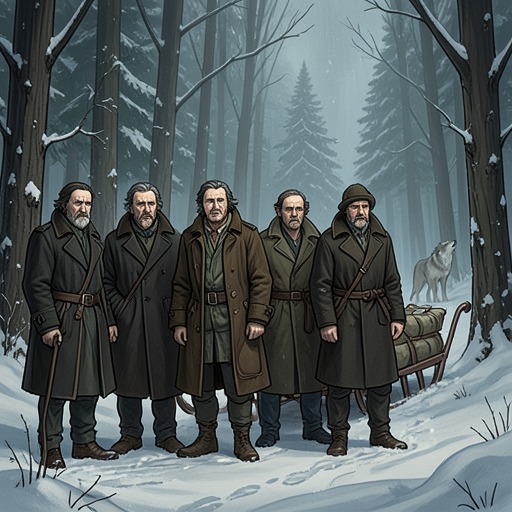
With the dogs falling, Mercedes weeping and riding, Hal swearing, and Charles weakened by stiffness, the party staggers into John Thornton’s camp at the mouth of White River. The dogs collapse as soon as they halt. The scene reveals not merely fatigue but a condition of extreme physical depletion: the animals have been driven beyond their ability to recover, while the humans remain determined to continue.
John Thornton is found whittling the final touches on an axe-handle made from birch. He listens to Hal’s account and offers terse advice, warning the travelers not to take further chances on the rotten ice. Hal answers with a sneering confidence that their arrival proves the warnings wrong. The exchange establishes a conflict between practical knowledge of the environment and reckless pride. Thornton knows the breed and understands the trail, but he also knows that his advice will not be followed.
Buck’s Rescue and the Failed Crossing
Buck refuses to rise. He senses impending disaster in the thin, rotten ice ahead and has been so damaged by the journey that Hal’s blows barely register. His strength is nearly gone when Hal attempts to force him onward. Thornton suddenly attacks Hal, hurling him backward and standing over Buck in uncontrollable rage. When Hal draws a hunting knife, Thornton knocks it from his hand with the axe-handle and cuts Buck’s traces.
The release is immediately tested by the departing team. Hal, Mercedes, Charles, and the remaining dogs move down the river, while Buck watches from the bank. Thornton examines him and finds no broken bones, but many bruises and a condition of terrible starvation. The river then confirms Thornton’s judgment. The sled’s rear drops as though into a rut; the gee-pole jerks upward; Mercedes screams; Charles turns back; and an entire section of ice gives way. The people and dogs disappear, leaving only a yawning hole in the trail. White River thus becomes the place where Buck is separated from a deadly expedition and where the consequences of that expedition are revealed within moments.
Recovery and Narrative Significance
After the rescue, Buck lies beside White River through the long spring days, watching the running water and listening to birds and the hum of awakening nature. John Thornton is still limping slightly from frozen feet suffered the previous December, but the continued warmth allows even that limp to disappear. Buck likewise regains his strength: his wounds heal, his muscles swell, and flesh returns to his starved body after the rigors of a journey of three thousand miles.
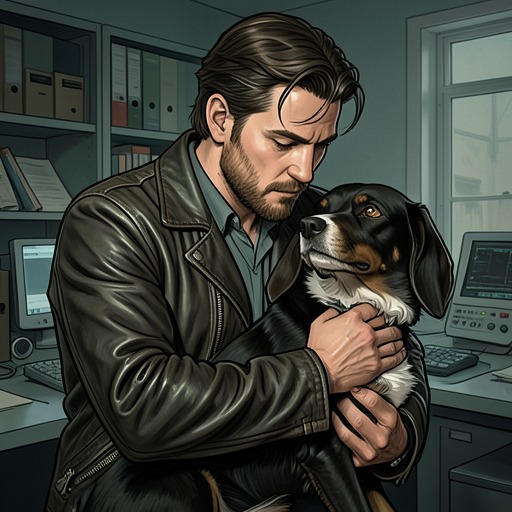
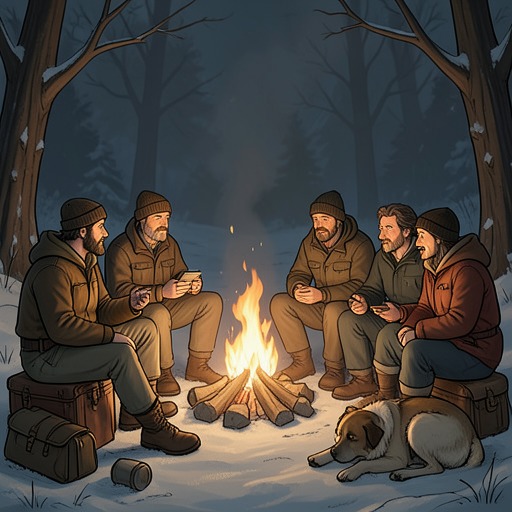
The camp is shared by Thornton, Buck, Skeet, and Nig while they wait for the raft that will carry them down to Dawson. Skeet, a little Irish setter, repeatedly cleans Buck’s wounds after breakfast, and Buck comes to anticipate her care as much as Thornton’s attention. Nig, a huge black dog with a friendly nature, is also gentle toward him. White River therefore marks more than a geographical pause. It is the threshold between exploitation and fellowship, where Buck’s body is restored and where a new relation with John Thornton can take root.
Later, the direction associated with White River changes from rescue to departure. After Buck’s extraordinary labor earns John Thornton sixteen hundred dollars, Thornton can pay certain debts and travel with Pete and Hans toward the East in search of the lost mine. Their route leads up the Yukon and into the Stewart River country, while the wilderness beyond White River becomes the larger field of hunting, travel, and discovery. The river’s importance lies in this transition: it is where Buck is saved from a human expedition that treats him as expendable, and from which he begins the life of strength, loyalty, and freedom that carries him toward the wild.